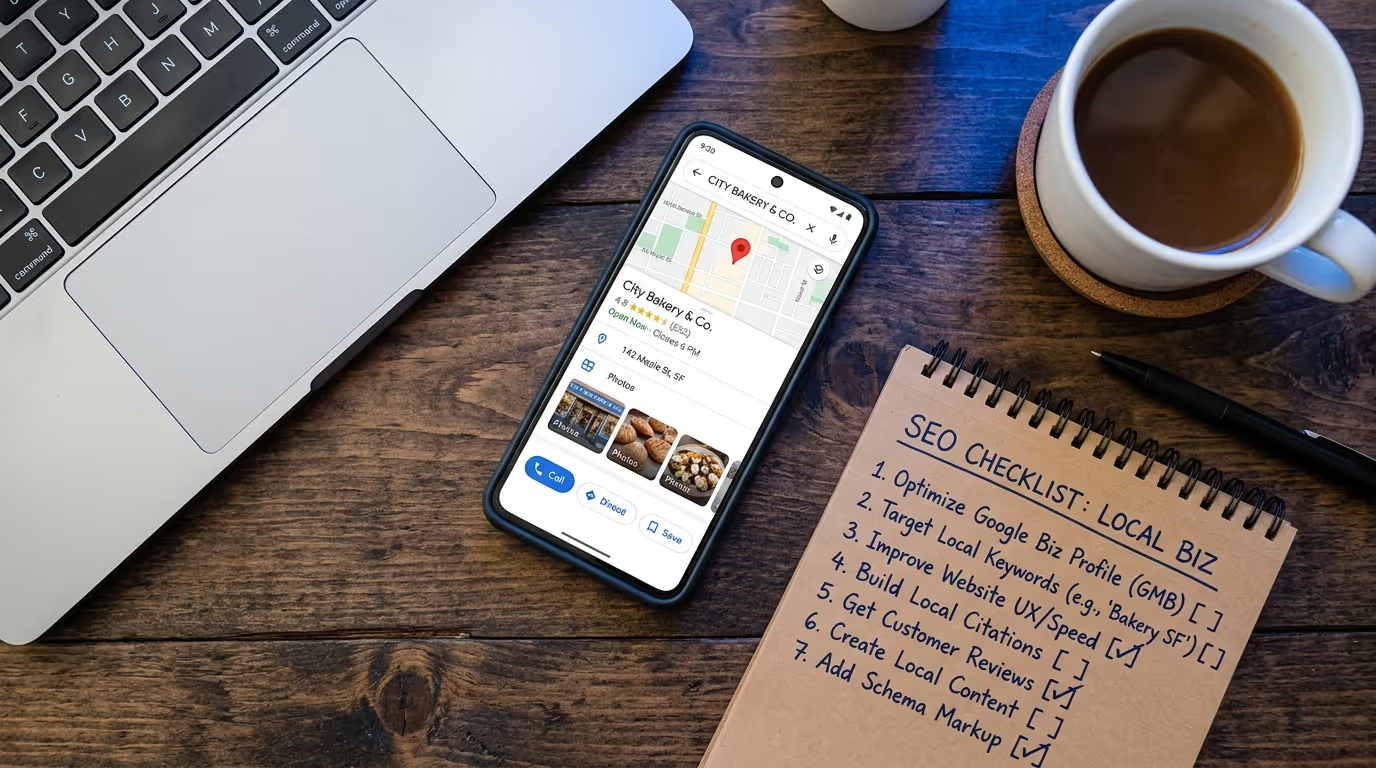

If your business name, address, and phone number are inconsistent across the web, it makes local search harder than it needs to be. Citations still matter, but not because you need to chase hundreds of random directories. They matter because Google, AI systems, and customers all need the same business information to trust what they see.
For home service businesses, citations are a support layer, not the whole strategy. You still need a strong Google Business Profile, real service-area pages, reviews, and a site that connects the dots. But when your NAP data is messy, everything else gets harder.
What a Local Citation Actually Is
A local citation is any mention of your business information on another website. Usually that means your name, address, phone number, website, and sometimes hours, services, or a map link.
There are two basic types:
- Structured citations: listings in directories like Google Business Profile, Apple Maps, Yelp, Bing Places, and industry sites.
- Unstructured citations: mentions of your business in articles, blog posts, local news, association pages, or sponsorship pages.
Why Citations Still Matter
Citations help in three ways:
- They reinforce trust. When the same business details appear in enough reliable places, Google is more confident the business is real.
- They support local visibility. Directory sites still rank in search, especially for local-intent queries.
- They help AI systems. BrightLocal’s 2026 research notes that local listings remain an input source for AI and LLM-style search systems, which means accurate third-party data still matters.
That is the key point: citations are no longer the headline tactic, but they still feed the ecosystem around your local presence.
What Matters Most: NAP Consistency
NAP means Name, Address, Phone.
That is the core of citation cleanup.
If your business is listed as:
- Blue Collar Builds LLC
- Blue Collar Builds
- Blue Collar Builds, Inc.
or your phone number changes from one listing to another, you create friction. The same is true for address formatting differences when they show up across your profile, website, and directory listings.
The goal is not perfect punctuation everywhere. The goal is consistency where it counts.
When Citations Matter Most
Citations matter most when a business is new and when the brand or entity changes. At launch, they help establish the first version of your brand footprint across Google and the wider web. After a rebrand or entity change, they matter even more because you need to reinforce the new business identity aggressively so Google understands that the old entity and the new entity are the same real-world business.
That is why a citation push is not just a cleanup task. It is a brand-entity task.
The Citation Priorities That Actually Move the Needle
Do not start with 100 directories. Start with the places that matter most.
1. Google Business Profile
Your GBP is the most important citation you have. It is the central reference point for the rest of your local presence, and Google’s own help docs make clear that you should edit business information directly from your profile and keep it accurate.
2. Core Maps and Listing Platforms
Make sure your information is correct on:
- Google Business Profile
- Apple Maps
- Bing Places
- Yelp
3. Industry-Relevant Directories
Only after the basics are clean should you move into niche directories that are relevant to the trade. For a painter, landscaper, roofer, HVAC company, or cleaner, a few strong trade-specific listings usually beat dozens of weak generic ones. Generic citation sources are the baseline foundation; industry-specific citation choices belong in industry-specific strategy, not a one-size-fits-all list.
4. Local and Community Mentions
Sponsorship pages, local chamber listings, neighborhood associations, local media mentions, and supplier pages can all help. These are often stronger than generic citation sites because they look like actual local presence.
What To Fix First
If a client comes to you with bad citations, use this order:
- Find duplicates
- Fix the core listings first
- Match NAP to the website and GBP
- Remove or merge obvious duplicates
- Then expand outward to secondary directories
Google’s own help guidance around duplicate profiles and editing business information reinforces a simple point: do not create more listings when the real problem is that the current ones are inconsistent.
What Home Service Businesses Usually Get Wrong
- They buy massive citation packages that create more noise than value.
- They let old agency listings sit untouched.
- They use different names in different places.
- They forget to update citations after moving offices, changing numbers, or rebranding.
- They think citations are a substitute for a real website and GBP.
That last one matters most. Citations help, but they do not replace the pages that actually sell the job.
How Citations Fit With the Rest of Your Local SEO
Citations are not a growth engine by themselves. They work best when they support the same core facts everywhere your business shows up: your Google Business Profile, website, service pages, service-area pages, and contact details.
The point is not to force random links or make a landscaping company sound like it needs a landscaping website design page. The point is to keep the business identity consistent so Google and customers see the same brand everywhere they check.
- Use citations to support brand consistency
- Use your website and GBP to do the heavy lifting
- Use niche directories only when they are relevant to the trade
- Use local and community mentions when they are real and useful
When citations are done well, they reduce confusion. When they are done poorly, they create extra cleanup work and can even weaken trust.
A Practical Citation Cleanup Checklist
- Audit the top core listings first
- Search for duplicates in Google and Google Maps
- Make the business name match your GBP and legal reality
- Make sure the phone number is identical everywhere
- Make sure the address formatting is clean and consistent
- Update hours, website URLs, and service descriptions
- Add photos where the platform allows it
- Remove old or abandoned profiles where possible
- Track every change in one place so it does not get messy later
When Citations Are Worth Extra Attention
Citations matter more when:
- you changed locations
- you rebranded
- you have duplicate profiles
- you serve a competitive local market
- you are building a new GBP from scratch
- you want to clean up an old agency footprint
They matter less when your core profile is already clean and your site has strong local relevance. In that case, citations are maintenance, not a growth engine.
What Google and AI Search Care About
Google’s systems and newer AI-style search experiences both need confidence in your business identity. If your business details are all over the place, that confidence drops.
That is why clean citations still matter in 2026. They help confirm who you are, where you operate, and whether the rest of your local presence is trustworthy.
Bottom Line
For home service businesses, citations are no longer the flashiest part of local SEO. But they still matter because they support trust, consistency, and visibility across Google and AI-powered search.
Start with the core listings, clean up duplicates, match your NAP, and then move into niche directories only when the foundation is solid.
That is the version that still works.
Ready for more qualified leads?
Related posts
Google Business Profile Verification in 2026: How to Get Live Without Getting Stuck
How to Build Service Area Pages That Actually Rank (Instead of Getting Flagged as Thin)